Dreaming of Croatia’s sun-drenched islands but find yourself worrying about pickpockets in crowded old towns or the safety of late-night taxis? You’re not alone. It’s the number one question on many travelers’ minds, and it’s a smart one to ask: is Croatia safe for tourists? As local transport experts who navigate these streets every single day, we’re here to put those fears to rest. The short answer is a resounding yes! Croatia isn’t just beautiful; it’s one of the safest countries you can visit in Europe.
But we won’t just leave it at that. In this 2025 guide, we’re giving you the complete, on-the-ground picture. We’ll share practical, easy-to-follow tips to help you avoid common scams, travel confidently on public transport, and feel completely secure, whether you’re exploring solo or with family. Our goal is to make sure your only worry is choosing which stunning beach to visit next. Let’s get you ready for a completely stress-free Croatian adventure!
The Short Answer: How Safe is Croatia Really?
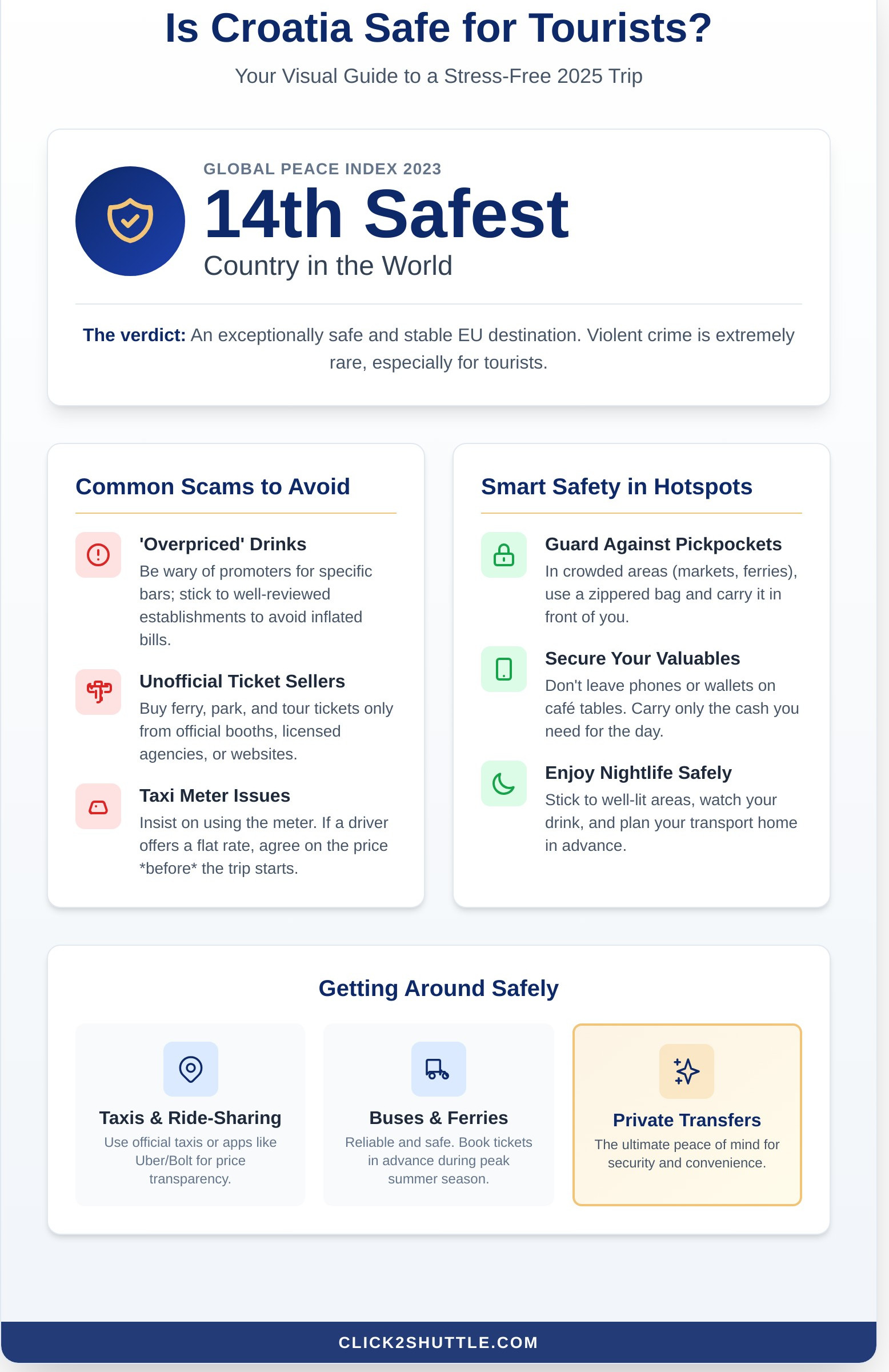
Let’s get straight to the point, so you can relax and start planning your trip: Croatia is an exceptionally safe country for visitors. If you’re asking yourself, is Croatia safe for tourists, the answer is a resounding yes. Its crime rates are significantly lower than many other popular Western European destinations, meaning you can explore its ancient cities and stunning coastline with peace of mind. Don’t just take our word for it; the 2023 Global Peace Index ranks Croatia as the 14th safest country in the world. Any outdated perceptions of post-war instability are firmly in the past. The modern Republic of Croatia is a secure, stable, and welcoming EU member state ready to show you the best of the Adriatic.
Understanding Crime Statistics vs. Reality
While no country is completely crime-free, it’s important to distinguish between statistics and the reality you’ll experience. Serious, violent crime is extremely rare, and incidents involving tourists are almost unheard of. The most common issues reported are minor, opportunistic crimes like pickpocketing or bag snatching in very crowded areas during peak summer months—think Dubrovnik’s Old Town walls or Split’s busy Riva promenade. Beyond that, you’ll find that Croatians are generally warm, friendly, and very helpful to visitors who need directions or assistance, which adds another layer of comfort to your travels.
A Country Built for Tourism
Tourism is the lifeblood of the Croatian economy, and the country invests heavily in protecting its most valuable asset: its visitors. This commitment is clear from the well-developed tourist infrastructure to the visible police presence in major hubs, particularly from June to September. In popular coastal cities, you will often see officers on patrol, many of whom are part of a special tourist police force. They typically speak English and are specifically tasked with helping travelers, whether you’ve lost your way or need to report an issue. This national focus ensures your safety is a top priority, allowing you to focus on enjoying your holiday.
Navigating Cities & Tourist Hotspots: Common-Sense Safety
Wandering through the ancient stone streets of Dubrovnik’s Old Town or the bustling Riva promenade in Split is a highlight of any Croatian holiday. These places are vibrant, beautiful, and overwhelmingly safe. When people ask, “is Croatia safe for tourists in its busy cities?” the answer is a resounding yes. However, like any popular destination worldwide, being aware of your surroundings is the key to a stress-free trip. It’s not about fear; it’s about smart, common-sense travel.
Avoiding Pickpockets and Petty Theft
Petty crime is not widespread, but it can occur in crowded areas. Be extra vigilant at busy markets, ferry ports, and bus stations. Keep your valuables secure by using a bag with a zipper that you can carry in front of you. Avoid leaving your phone or wallet on a café table, as this is an easy target for a snatch-and-run thief. A good rule of thumb is to carry only the cash you need for the day and one or two cards, leaving the rest secured in your accommodation.
Common Scams to Look Out For
While most Croatians are honest and welcoming, a few tourist-focused scams exist. Being aware of them is the best way to avoid them. While major incidents are very rare, as noted in sources like the official U.S. travel advisory, being prepared for minor issues is always wise. Watch out for:
- The ‘Overpriced’ Drinks Scam: Be wary of overly friendly promoters inviting you into certain bars or “gentlemen’s clubs,” where you may be presented with a shockingly high bill for drinks. Stick to reputable, well-reviewed establishments.
- Unofficial Ticket Sellers: Always buy your ferry tickets, national park entrances, or tour tickets from official booths, licensed agencies, or their official websites. Street vendors may sell fake or overpriced tickets.
- Taxi Meter Issues: For short trips, some taxi drivers might suggest a flat rate instead of using the meter. This rate is often much higher than the metered fare. Insist on using the meter or agree on a fair price before you get in.
Enjoying Croatia’s Nightlife Safely
Croatia’s coastal cities come alive after dark with fantastic bars and clubs. The atmosphere is generally relaxed and safe. To ensure a great night out, stick to well-lit and populated areas, and always keep an eye on your drink. Most importantly, plan your transport back to your accommodation in advance, especially if you’re staying outside the main city centre. Don’t want to worry about your ride home? Pre-book a reliable private transfer.
Transportation Safety: The Smart Way to Get Around Croatia
Navigating a new country can be daunting, but when considering if Croatia is safe for tourists, the answer is a firm yes, and this extends to its modern and reliable transportation network. From the scenic coastal roads to the island-hopping ferries, getting around is generally straightforward and secure. However, knowing your options and a few local tips will ensure your journey is smooth, comfortable, and stress-free.
Taxis and Ride-Sharing Apps
In major cities and tourist hubs, taxis are readily available. To avoid being overcharged, always use clearly marked, official taxi vehicles and insist the driver turns on the meter. If there’s no meter, agree on a fixed price in Euros before you start your trip. For added convenience and price transparency, ride-sharing apps like Uber and Bolt are popular and operate reliably in cities like Zagreb, Split, and Dubrovnik.
Buses and Ferries
Croatia’s network of long-distance buses and coastal ferries is the backbone of public transport. These services are safe, efficient, and widely used by locals and tourists alike. During the peak summer season (June to August), it’s wise to book your tickets in advance, especially for popular ferry routes to islands like Hvar or Korčula. As with any public transport, keeping an eye on your luggage during stops is one of many practical travel safety tips that ensures a worry-free trip.
The Ultimate Peace of Mind: Private Transfers
For travelers who prioritize security and convenience, a private transfer is the gold standard. It removes all the guesswork and potential stress from your journey. You get a professional, vetted, English-speaking driver who meets you at your arrival point, handles your luggage, and takes you directly to your destination. This option is ideal for airport arrivals or traveling between cities without navigating unfamiliar public transport hubs.
- Fixed Pricing: The price is agreed upon upfront, so there are no surprise fees or meter-watching anxiety.
- Guaranteed Safety: Travel in a clean, modern vehicle with a professional driver who knows the local roads inside and out.
- Door-to-Door Convenience: Enjoy a seamless journey from your airport, hotel, or port directly to your destination, without any hassle.
Relax and let a professional handle the driving. Experience a seamless journey with Click2Shuttle’s transfer options.
Outdoor & Adventure Safety: From the Adriatic Sea to the Mountains
Croatia’s stunning natural landscapes, from the crystal-clear Adriatic to rugged national parks, are a massive draw for visitors. Many travelers ask, is Croatia safe for tourists who want to hike, swim, and explore? The answer is a definite yes! With a bit of local knowledge and preparation, you can enjoy everything the great outdoors has to offer safely and comfortably.
Think of us as your local guide. Here are the essential tips to keep in mind so you can focus on making amazing memories.
Safety at the Beach and In the Water
The Croatian coastline is famous for its beautiful, rocky beaches. While stunning, they come with a small, spiky resident: the sea urchin. Stepping on one is a quick way to ruin a perfect beach day. A simple pair of water shoes is your best friend here—they make exploring rocky seabeds comfortable and safe. Also, remember that the Croatian sun is powerful, so stay protected.
- Respect the Flags: If you see red flags on a beach, it means swimming is prohibited due to strong currents or other dangers. Always follow the local warnings.
- Hydrate & Protect: Drink plenty of water throughout the day. Apply a high-SPF, water-resistant sunscreen frequently, even on cloudy days.
- Look Out for Urchins: Always wear water shoes on rocky or pebble beaches to protect your feet.
Hiking and Exploring National Parks
National parks like Plitvice Lakes and Krka are world-famous for a reason. To protect both yourself and the delicate ecosystem, always stay on the clearly marked trails and wooden pathways. Wandering off-piste can be dangerous and lead to hefty fines. Before you set out, make sure you’re prepared with sturdy footwear (leave the flip-flops at your hotel), pack more water than you think you’ll need, and check the weather forecast.
Weather Considerations: The Bura Wind
Croatia has a unique and powerful weather phenomenon called the Bura. This is a strong, cold, and unpredictable northeasterly wind, most common in the winter and spring. It can appear suddenly and reach hurricane-force speeds, causing authorities to close major coastal roads and bridges for safety. If you’re planning a road trip along the coast, especially during the off-season, always check the official road conditions before you travel.
Exploring Croatia’s natural beauty is a must-do experience. With these simple precautions, you can be confident that your adventure will be both thrilling and safe. And when your day of exploring is done, let us handle the driving. Book your reliable and comfortable transfer with Click2Shuttle and relax—we’ll get you there safely.
Safety for Different Types of Travelers
Croatia’s famous hospitality extends to everyone. We believe travel should be safe and enjoyable for all, which is why we want to address specific concerns you might have. Whether you’re traveling solo, with your family, or as part of the LGBTQ+ community, you’ll find a welcoming and secure environment here. Answering the question “is Croatia safe for tourists?” often depends on who is asking, so let’s break it down.
Is Croatia Safe for Solo Female Travelers?
Absolutely. Croatia is widely considered one of Europe’s safest destinations for women traveling alone. Violent crime rates are very low, and the general culture is respectful. You can confidently explore the historic streets of Dubrovnik or the vibrant waterfront of Split on your own. Of course, standard travel smarts always apply:
- Let a friend or family member know your itinerary.
- Be mindful of your belongings in crowded tourist spots.
- For late-night arrivals, pre-booking a professional airport transfer ensures a secure and stress-free start to your trip.
Street harassment is uncommon, allowing you to relax and fully immerse yourself in the incredible atmosphere.
Is Croatia Safe for Families with Children?
Croatia is a fantastic destination for a family holiday. The culture is incredibly family-oriented, and children are welcomed warmly in restaurants, cafes, and public spaces. Many of the country’s pebble beaches feature calm, shallow waters perfect for little swimmers. When it comes to transport, safety is key. Croatian law requires children under 150cm in height to use an appropriate child safety seat. When you book a private transfer, you can request the correct seats in advance, ensuring your family travels securely and in comfort from the moment you land.
Is Croatia Safe for LGBTQ+ Travelers?
While Croatian society has traditional roots, the attitude in major cities and popular tourist destinations is open and accepting. Urban centers like Zagreb, Split, and Rijeka host annual Pride events and have a growing number of LGBTQ+-friendly venues. On the coast, islands like Hvar and Rab are known for their cosmopolitan and welcoming vibe. Public displays of affection are generally not an issue in these areas, allowing you to travel with confidence and be yourselves. As with any destination, being aware of your surroundings is always a good practice.
The Final Word: Your Safe Croatian Adventure Awaits
So, to answer the core question, is Croatia safe for tourists? The evidence in 2025 is a resounding yes. With its remarkably low crime rates and welcoming locals, your main focus can be on soaking up the stunning Adriatic coastline and historic cities. As we’ve covered, exercising standard travel awareness in tourist hotspots and choosing reliable transportation are the simple keys to a flawless trip.
This exceptional safety and quality of life often lead visitors to consider more than just a holiday. For those who fall in love with the country and contemplate buying a property, reliable local expertise is essential. Licensed agencies such as 385 Real Estate can provide the necessary guidance for navigating the market in sought-after coastal regions.
For complete peace of mind on the road, travel with confidence and comfort. Our professional, English-speaking drivers and modern, air-conditioned vehicle fleet have earned us top ratings on TripAdvisor for safety and reliability. We’ve got your back, so you can simply relax and enjoy the view. Book your safe Croatian transfer with our professional drivers today.
Now, pack your bags and get ready to create unforgettable memories in beautiful, safe Croatia!
Frequently Asked Questions About Safety in Croatia
Is the tap water in Croatia safe to drink?
Yes, absolutely! Croatia has some of the highest quality tap water in Europe. It is perfectly safe and delicious to drink straight from the tap throughout the entire country, including the islands. Feel free to refill your water bottle from any faucet to stay hydrated and save a few Euro. While you can easily buy bottled water everywhere, it is not necessary for health or safety reasons. Just turn on the tap and enjoy!
Are there still landmines in Croatia from the war?
You can travel with peace of mind. All tourist destinations, cities, major roads, and coastal areas are completely free of landmines and have been for many years. The remaining risk is confined to very remote, clearly marked, and fenced-off rural areas that you would have no reason to enter. As long as you stick to official roads and marked hiking trails, you are 100% safe. There is no danger in any place a tourist would typically visit.
What is the emergency number in Croatia?
The single, universal emergency number for Croatia and the entire European Union is 112. You can call this number free of charge from any mobile phone or landline to contact the police, ambulance, or fire department. Operators in major centres and tourist areas usually speak English. We recommend saving 112 in your phone as soon as you arrive. It’s always better to be prepared, even though you’re unlikely to need it on your trip.
Is driving in Croatia safe for tourists?
For the most part, yes. The motorways (autocesta) are modern and very well-maintained. However, local and coastal roads can be narrow, winding, and extremely busy during the summer peak season. Local drivers can also be quite assertive. If you’re not used to spirited driving or navigating tight spots, it can be stressful. To truly relax and enjoy the scenery, consider a professional transfer service and let a local expert handle the roads for you.
Do I need to speak Croatian to be safe and get around?
Not at all. While learning a few basic phrases like “Hvala” (thank you) is always appreciated, English is very widely spoken in all tourist areas. You will have no problem communicating in hotels, restaurants, shops, and with transport providers. The answer to “is croatia safe for tourists who don’t speak the language” is a definite yes. Croatians are generally friendly and happy to help visitors, so you’ll always find someone who can point you in the right direction.
Are there any specific health risks I should be aware of?
Croatia is a very safe country with high standards of public health. No special vaccinations are required for entry. The main things to be mindful of are common to any sunny Mediterranean destination. The summer sun can be intense, so use high-SPF sunscreen, wear a hat, and drink plenty of water. If you’re hiking in forested areas, be aware of ticks and use an appropriate repellent. Pharmacies (called “Ljekarna”) are readily available for any minor needs.