Dreaming of turquoise waters, ancient walled cities, and sun-drenched islands? You’re heading in the right direction. But planning a trip to Croatia can feel overwhelming with so many stunning places to see and logistical details to sort out. Don’t worry—we’ve got your back. As local transport experts, we live and breathe Croatia every day. This guide is packed with our best on-the-ground advice to help you plan your vacation, from booking flights to navigating the coast like a seasoned traveler, ensuring a flawless, stress-free adventure.
Planning Your Croatia Trip: Key Steps Before You Go
A little preparation goes a long way. Starting with these basics will help you avoid the common mistakes many first-time visitors make, setting you up for a relaxing and memorable vacation from the moment you land.
When is the Best Time to Visit Croatia?
While the peak summer months of July and August offer glorious sunshine, they also bring the biggest crowds and highest prices. To get the best of both worlds, discover the magic of the shoulder seasons. The months of May, June, and September provide beautiful warm weather, fewer people, and more affordable accommodation. The Adriatic Sea is still warm enough for swimming, and you’ll find exploring cities and national parks far more comfortable.
Don’t Overstuff Your Itinerary
It’s tempting to try and see everything, but Croatia is bigger than it looks on a map, and travel between destinations takes time. For a truly relaxing trip, focus on quality over quantity. Instead of rushing through, choose one or two regions—like Dalmatia (Split, Dubrovnik, and the islands) or Istria (Rovinj and Pula)—and give yourself time to soak in the atmosphere. You’ll have a much more enjoyable experience.
Book Accommodation and Key Transport Early
Spontaneity is great, but not always practical in Croatia, especially during the high season. Popular accommodations, ferry routes, and tours can sell out months in advance. To avoid stress and disappointment, secure your airport transfer before you land. Early booking not only guarantees your spot but often means better prices and a wider range of options to choose from.
This forward-planning approach is key for popular destinations globally. For instance, if your travels ever take you to Japan for a concert or festival, securing tickets in advance through a service like Jasumo Tickets is essential to avoid missing out.
Essential Items to Pack for Croatia
Packing light is always a good idea, but a few key items are non-negotiable for a trip to Croatia. Most beaches are pebbly, so a pair of water shoes is a must for comfortable swimming. Even in the summer, evenings by the coast can get cool, so pack light layers. And of course, don’t forget the essentials: high-SPF sunscreen, a wide-brimmed hat, sunglasses, and a reusable water bottle to stay hydrated under the Mediterranean sun.
Getting Around Croatia: Transport Tips from the Experts
Navigating Croatia’s stunning coastline and charming inland towns can be tricky if you don’t know the local secrets. Understanding the pros and cons of each travel option will help you choose the comfort and convenience you need to maximize your precious vacation time.
Renting a Car vs. Private Transfers
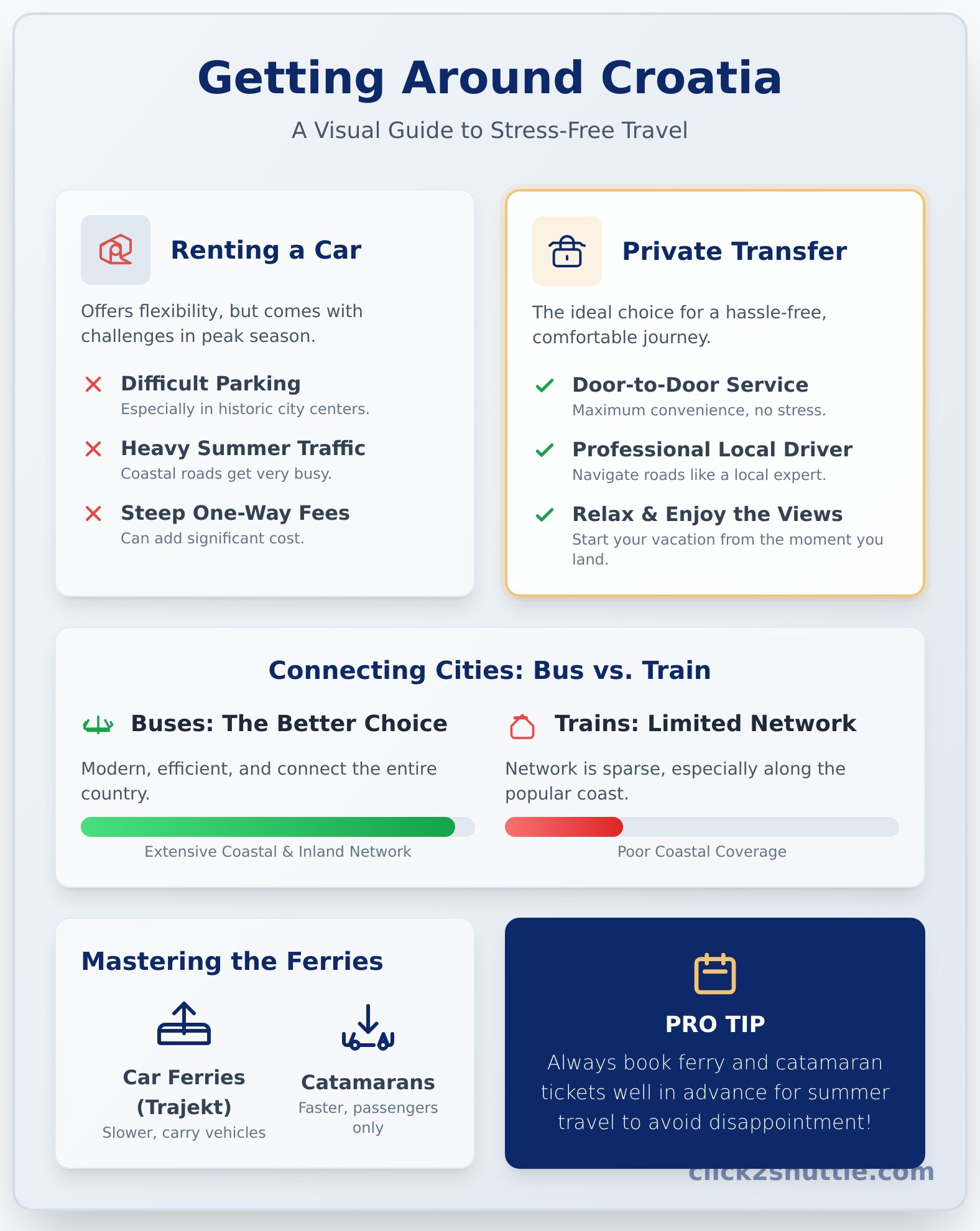
Renting a car offers great flexibility, but it comes with its own set of challenges. Finding parking in historic city centers can be a nightmare, one-way drop-off fees can be steep, and the coastal roads get extremely busy in summer. For a hassle-free alternative, consider a private transfer. You get door-to-door service from a professional local driver who knows the roads inside and out. Relax and let us handle the driving.
Why Buses are Better than Trains for Most Routes
While trains are a great way to travel in many parts of Europe, Croatia’s train network is limited, especially along the popular Dalmatian coast. In contrast, the country’s bus network is modern, extensive, and highly efficient, connecting all major cities and towns. Buses are comfortable, air-conditioned, and generally run on time. For popular routes in the summer, it’s always a good idea to book your tickets online in advance.
Island Hopping: Mastering the Ferries
A trip to Croatia isn’t complete without visiting at least one of its idyllic islands. However, planning your island-hopping route requires care, as direct connections between every island are rare. It’s important to understand the difference between slow car ferries (trajekt) and faster passenger-only catamarans. Always buy your tickets from official operators like Jadrolinija and Krilo, and book well in advance for summer travel.
Taxis and Rideshares in Cities
While convenient for short trips, taxis can be expensive, especially when hailed from airports or major tourist hubs. Rideshare apps like Uber and Bolt operate in major cities like Zagreb, Split, and Dubrovnik and can be a more affordable option. For longer journeys or airport runs, you’ll always get the best value and peace of mind with a pre-booked transfer that offers a fixed, fair price.
Money, Food, and Culture: Living Like a Local
Part of the joy of travel is embracing the local lifestyle. These simple tips on money, food, and culture will help you navigate daily life in Croatia, enjoy delicious meals, and make your interactions with locals smoother and more enjoyable.
Croatia’s Currency is the Euro
As of January 2023, Croatia officially adopted the Euro (€). The old currency, the Kuna, is no longer in use. Credit cards are widely accepted in hotels, restaurants, and larger shops, but it’s always wise to carry some cash for smaller cafes, market stalls, and tips. When withdrawing money, use official bank ATMs (labeled “bankomat”) to avoid the high commission fees charged by independent currency exchange machines.
Tipping Etiquette in Restaurants and Cafes
Tipping is always appreciated for good service in Croatia, but it is not considered mandatory. In restaurants, rounding up the bill or leaving a 10% tip is a common practice if you were happy with your meal and service. It is best to leave your tip in cash directly for your server, as there isn’t always an option to add it to a credit card payment.
Eat at a ‘Konoba’ for an Authentic Meal
For a truly authentic taste of Croatia, skip the tourist-trap restaurants and find a local ‘konoba’. These are traditional, often family-run taverns that serve simple, delicious dishes made with fresh, local ingredients. Expect hearty meals like grilled fish, peka (meat and vegetables slow-cooked under embers), and homemade pasta. Don’t be afraid to ask for the “dnevna ponuda” (daily offer) for the freshest meal of the day.
Learn a Few Basic Croatian Phrases
While English is widely spoken in all tourist areas, learning a few basic Croatian phrases will go a long way in showing respect and connecting with locals. A simple “Dobar dan” (Good day), “Hvala” (Thank you), and “Molim” (Please/You’re welcome) will be met with warm smiles. Locals always appreciate the effort, even if your pronunciation isn’t perfect.
These authentic interactions are the moments that make a trip unforgettable, and some travelers even share these stories through podcasts to inspire others. If you’re curious about turning your travel experiences into compelling audio, you can discover Mobile Podcasting Montreal to see how professionals help creators tell their stories.
Frequently Asked Questions About Croatia Travel
Is Croatia expensive for tourists?
Croatia can be as affordable or as luxurious as you want it to be. While popular destinations like Dubrovnik and Hvar can be pricey in peak season, traveling in the shoulder season, eating at local konobas, and staying in private apartments (‘apartmani’) can make it very budget-friendly.
How many days are enough for a trip to Croatia?
We recommend at least 7 to 10 days to get a good feel for one region, such as the Dalmatian coast. If you want to explore multiple regions, like Istria and Dalmatia, or visit several national parks, you’ll want to plan for two weeks or more.
Is English widely spoken in Croatia?
Yes, English is widely spoken, especially among younger generations and anyone working in the tourism industry. You will have no problem communicating in hotels, restaurants, and shops in all major tourist areas.
Do I need to carry cash in Croatia?
While credit cards are widely accepted, it’s a good idea to carry some Euro cash for smaller purchases at bakeries, local markets, cafes, and for tipping. Not all small businesses accept cards.
Is Croatia a safe country for travelers?
Croatia is a very safe country with a low crime rate. Solo travelers, including women, can feel comfortable and secure. As with any destination, use common sense, be aware of your surroundings, and keep your valuables safe.
What is the best way to get from Split to Dubrovnik?
The most scenic and comfortable way is a private transfer, which takes about 3 hours door-to-door. Other options include taking a bus, which is affordable but takes longer, or a seasonal catamaran, which offers beautiful sea views but is weather-dependent.
A little planning is all it takes to transform a good trip into an unforgettable one. By keeping these insider tips in mind, you’re ready to explore the incredible beauty of Croatia with confidence and ease. Let go of the travel stress and focus on making memories that will last a lifetime. Travel Croatia without the stress? Book your private transfer! Our professional drivers are ready to welcome you and ensure your journey is as smooth and comfortable as the Adriatic itself.